Best E-Invoice Solution for Indian Enterprises in 2026: Beyond IRN Generation
Most e-invoice platforms can generate an IRN. The real challenge begins after that. In 2026, enterprises need a compliance platform that manages the entire GST lifecycle—from e-invoicing and e-way bills to audit trails, ERP integration, automated error recovery, and DPDP Act compliance. This guide explains the six critical factors enterprises should evaluate before choosing an e-invoice solution
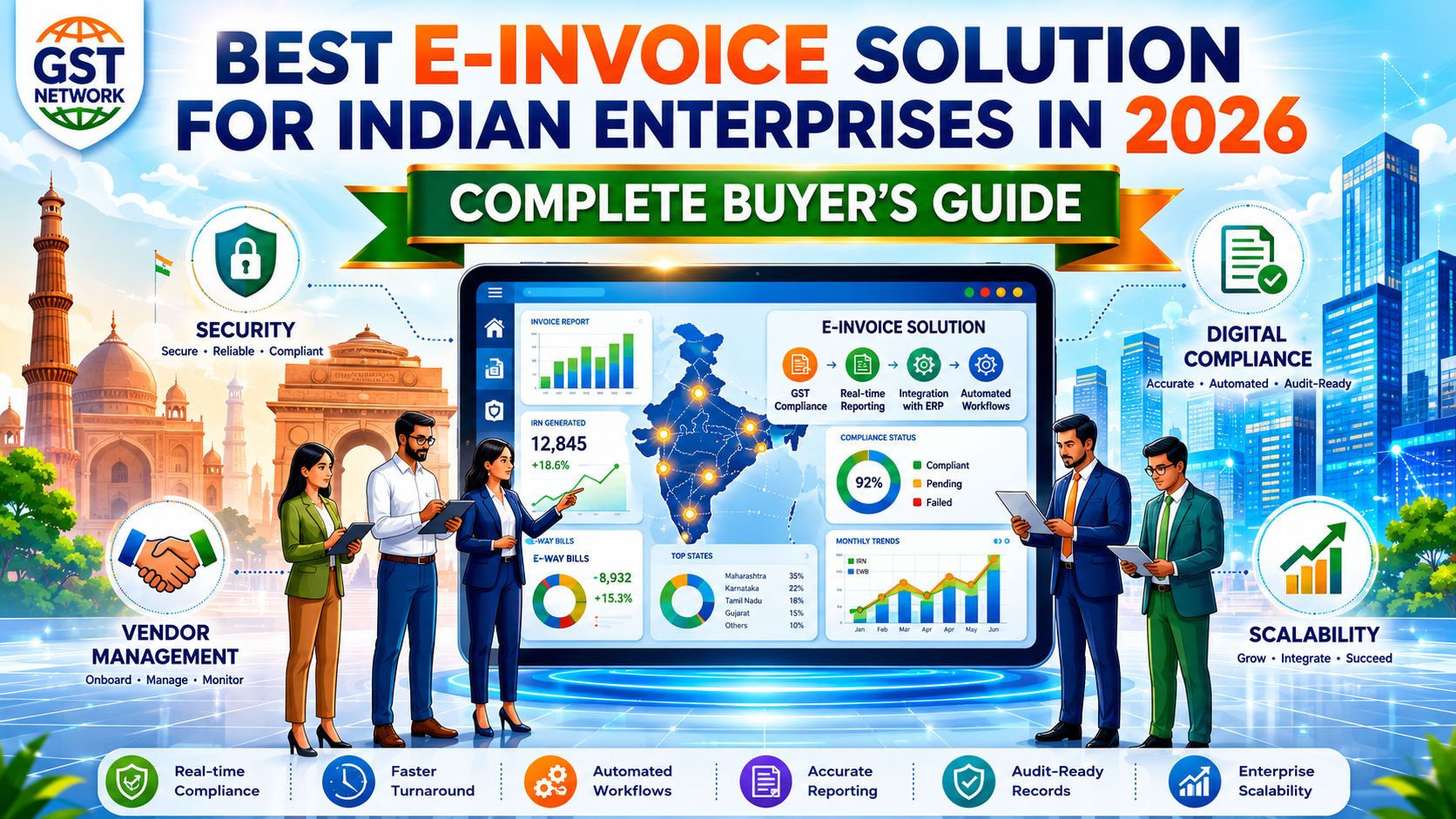
Best E-Invoice Solution for Indian Enterprises in 2026: Complete Buyer's Guide
For most enterprises, e-invoicing is no longer the challenge.
The challenge is everything that happens after the IRN is generated.
Many finance and compliance teams have successfully implemented e-invoicing, yet continue to spend significant time handling cancellations, e-way bill mismatches, reconciliation issues, transporter updates, and audit preparation.
In 2026, the best e-invoice solution is not the one that simply generates IRNs. It is the platform that manages the entire GST compliance lifecycle inside your ERP ecosystem while minimizing manual intervention.
Why Enterprise Requirements Have Changed
With e-invoicing now mandatory for businesses with annual turnover exceeding ₹5 crore, compliance volumes have increased significantly across India.
As transaction volumes grow, enterprises face new operational challenges:
Increased IRN generation volumes
Higher cancellation and amendment requests
E-Way Bill reconciliation issues
Manual exception handling
Growing audit and compliance requirements
Increased pressure on ERP and IT teams
As a result, organizations are shifting their focus from basic compliance tools to enterprise-grade GST compliance platforms.
1. Full Compliance Lifecycle Management
Generating an IRN is only the first step.
A modern enterprise compliance workflow typically includes:
IRN Generation → E-Way Bill Creation → Part-B Updates → Multi-Vehicle Handling → Consolidated EWB → Extensions → Cancellation → Audit Tracking
Many solutions stop after IRN generation. Enterprise platforms must support the complete document lifecycle to reduce operational complexity and compliance risk.
2. ERP-Native Integration
The best solutions work seamlessly with existing ERP systems such as SAP, Oracle, Microsoft Dynamics, and custom ERP environments.
Enterprises should look for:
Configuration-based integrations
Minimal custom development
Multi-business-unit support
Flexible data mapping
Rapid adaptation to GST changes
An API alone is not enough. True ERP integration should fit naturally into existing business processes.
3. Automated Error Recovery
At enterprise scale, compliance exceptions occur every day.
Common examples include:
GSTIN validation failures
IRN rejection errors
Distance validation mismatches
Network and IRP timeouts
Duplicate document submissions
A robust platform should automatically identify, classify, and resolve these issues wherever possible, reducing dependency on manual support teams.
4. Audit-Ready Compliance Records
Tax audits increasingly require complete visibility into document history.
Enterprises should ensure their platform provides:
Immutable audit trails
Version history
User activity tracking
Change logs
Document status history
The ability to demonstrate who changed what, when, and why is becoming a critical compliance requirement.
5. Compliance Intelligence
Traditional dashboards show historical activity.
Enterprise compliance teams need predictive visibility.
Advanced platforms should help identify:
Unusual cancellation patterns
IRN and EWB mismatches
Compliance bottlenecks
Operational risks
Exception trends
The objective is to prevent compliance failures before they occur.
6. Built-In DPDP Act 2023 Compliance
Data privacy is now an essential part of enterprise compliance.
E-invoice and e-way bill systems process significant amounts of personal and business data, including:
Vendor information
Contact details
Bank account details
Transporter information
Business identity records
Under the Digital Personal Data Protection (DPDP) Act 2023, organizations must maintain appropriate controls around personal data processing.
Key capabilities to evaluate include:
Consent Management
The platform should maintain version-controlled records of consent and processing notices wherever applicable.
Withdrawal Management
Consent withdrawal requests should be tracked and propagated across connected systems through documented workflows.
Grievance Handling
Organizations should be able to manage privacy-related requests, investigations, and resolutions through structured workflows.
Compliance Evidence Packs
Regulatory audits require quick access to records, audit logs, and processing history. Evidence should be available on demand.
Tamper-Evident Audit Trails
Hash-based audit logging and immutable record keeping help demonstrate compliance integrity.
Questions Every Enterprise Should Ask a Vendor
Before selecting an e-invoice platform, ask:
How do you manage the complete post-IRN lifecycle?
How does your ERP integration work?
What happens when IRN generation fails?
Can you demonstrate a complete audit trail?
How do you support DPDP compliance requirements?
Can you provide regulator-ready compliance evidence?
The quality of these answers often reveals whether a platform is truly enterprise-ready.
Conclusion
In 2026, enterprise GST compliance is no longer about generating an IRN.
Success depends on managing the entire compliance lifecycle, integrating seamlessly with ERP systems, automating exception handling, maintaining audit readiness, and addressing emerging data privacy requirements.
Organizations evaluating e-invoice solutions should focus beyond basic compliance functionality and assess whether a platform can support long-term operational, regulatory, and audit needs at scale.
The enterprises that invest in lifecycle-driven compliance today will spend less time fixing issues tomorrow and more time focusing on business growth.